
Shaping Change through Place-Based Education & Career and Technical Education
Dear SEMIS Coalition Members,
Around this time last year, I was invited to serve as an advisory board member for a new Career and Technical Education (CTE) course at Ypsilanti Community High School on Agriscience and Botany. As I sat down for the first advisory board meeting in Ms. Laurel Wiinikka-Buesser’s classroom, I noticed a student-written vision statement for the course on the meeting agenda:
“We want to create a green jobs workforce and empower young people to increase biodiversity, create and repair green infrastructure, and increase climate resilience in Ypsilanti Michigan and beyond!”
We opened a conversation in this blog earlier this year about change and our ability to shape the nature of change in our communities through place-based education. It struck me as I read this Agriscience and Botany CTE course vision statement that the young people in this course were doing their own shaping of change – and not just for their course that year, but far into the future through a vision for the impact of their careers. And they were shaping that change using a vehicle that doesn’t come up as often as it probably should in changemaking, or place-based education conversations: Career and Technical Education.
Over the past 6 years, there has been continuous growth in enrollment in CTE programs across the state and, thanks to a millage that passed last November, there is now a dedicated, multi-year investment in and expansion of Career and Technical Education (CTE) in Washtenaw County. For this month’s blog, we had a conversation with leaders in CTE across our Coalition about what’s behind this rise in CTE enrollment, the intersections of place-based education and CTE, and how CTE might be a growing method for shaping change in schools across our region.
So, what exactly is CTE? To learn more about CTE, its history, and the recent millage I connected with Dr. Ryan Rowe, Executive Director of CTE Governance & Strategic Initiatives for the Washtenaw Intermediate School District (WISD), and longtime advocate for applied and experiential learning. Ryan shared with me that one way to think about a CTE course is as an elective – but with an additional set of state requirements. Beyond the technical skill and academic content requirements of a CTE course, it must also include things like work-based learning experiences, opportunities to participate in a career technical student organization, and the opportunity to earn at least one state-recognized credential, license, or certification in the career field of study. CTE instructors also have additional requirements, including being vocationally certified in the career field they’re teaching and establishing and convening an advisory committee of local industry and community members twice a year.
CTE has a long history in southeast Michigan, much of which has been driven by the automotive and manufacturing industries developed in the region. “For a long time in the manufacturing mecca of Willow Run and Ypsilanti, they had the Regional Career Technical Center that was very, very big and robust,” Ryan shared. “Then as things shifted here in southeast Michigan and with the economics on the east side of Washtenaw County, the Willow Run and Ypsilanti districts merged. Career Technical Education got somewhat lost in the wake of that.”
But a recent combination of sustained growth in CTE enrollment and the recent millage are changing that trend – and even changing what and who we think CTE is for. “The first thing I would say is that a non-negotiable for this community is that CTE is a pre-K through 12th grade ‘continuum of care.’ We like to refer to it as applied and experiential learning opportunities, and recognize that there are links and ladders throughout a pre-K through 12th grade journey that lead to a student’s post-secondary plan,” Ryan says, regarding the vision of the millage. The millage also allows the county to help sustain and grow CTE programs that already exist, including maintaining industry specific equipment like automotive hoists or CNC machines for advanced manufacturing. But, importantly, it is also an opportunity for schools and industry professionals across the county to work collaboratively to shape a new vision for CTE in our region.
Part of that new vision is a recognition that there is a growing interest in place-based and “green” CTE programs across the region. “About a year or more ago,” Ryan shared, “I gathered with the local district CTE directors and administrators and asked them to prioritize which areas of CTE they’d look to expand if the millage passed. I was surprised and pleased to hear that Ypsilanti, Ann Arbor, and Whitmore Lake all wanted to launch agriscience programs. That was not on my bucket list, that was not on my radar, and each of them had a unique approach. In Ypsilanti, [the approach is] sustainability. In Ann Arbor, they really wanted to connect it to their advanced placement (AP) environmental science program. And up at Whitmore Lake, they want to concentrate on forestry and Christmas trees in particular. I thought, this is remarkable, that we’re in Washtenaw County, we have 3 districts that want to launch agriscience programs all centered on sustainability and environmental stewardship, but in different ways.”
Paula Sizemore, a former science teacher at Ypsilanti Community High School and current place-based and ecojustice education coach with the SEMIS Coalition is not surprised by this trend. “Green infrastructure and Green CTE is step one to encouraging people to understand how they can work with nature rather than against it to solve problems,” she shared. “In a place-based education approach, you are rooted in place and encouraged to recognize the needs of your place. [In place-based CTE] students are challenged to go beyond the surface issues and look at the root causes of the issues that are prominent in their fields.” Paula, who taught for 30 years in Ypsilanti Community Schools after working in the skilled trades herself, also recognizes how place-based and CTE both anchor learning in students’ passions. During her time teaching at Ypsilanti Community High School, she started a botany course that focused on topics, like growing food, that connected students to their place and to each other. “What we realized at the high school was people need to grow things. Nutrition needs to be close. And it turns out that’s what the kids wanted too – it just captured them, and got them excited, and they all were plugged in, and it was great to see the engagement, and then for them to start sharing and opening up [with each other] about what they ate and grew in their own homes.”
As it turns out, that course was such a draw for students that the district decided to turn it into a CTE course. Because Paula was approaching retirement, they brought on another powerful educator to lead the transition. Laurel Wiinikka-Buesser, who is in her fourth year of teaching, is the current Agriscience/Botany CTE program teacher at Ypsilanti Community High School. “I had applied for a biology position [at the high school] and during the interview they asked me if I would be interested in teaching botany and, I love plant science so I was very excited. And I think that came through. But I had no idea they would want me to turn this into a CTE course.” But as soon as Laurel came on board, she was encouraged, and even given extra planning time, to start developing a new CTE course. Freshly graduated from her master’s of teaching program, she took this planning very seriously and worked hard to incorporate what she had learned on science-supported trends in education into the course, including place-based education. At the encouragement of Paula and other teachers at Ypsilanti Community High School, Laurel attended a SEMIS Coalition professional development event as she was planning the course. “I came to that PD and fell in love with the SEMIS community, and then that just lit the fire of place-based learning even more for me.”
For Laurel, it was natural to start with a place-based education foundation and then bring in CTE because young people care about their homes and communities. “Sometimes I feel like I’m coming at this sideways. I don’t have industry experience, but I also don’t have industry bias. I’m just kind of asking myself, ‘what do I think is most compelling and useful to students?’ And, ‘what needs to get done locally for communities?’ And then CTE fits naturally into that through place-based learning.”
Ryan agrees that there are strong connections between CTE and place-based education. “I think, naturally, we accentuate place-based education through career technical education and special education. It’s often in general education that we struggle the most.” For Ryan, both CTE and place-based education are, by nature, student-driven. In place-based education, learning is rooted in issues students care about and incorporates their lived experience. In CTE, students are exploring, and hopefully affirming, what they’re passionate about and who they want to be. CTE and place-based education are also both oriented around solving real problems in society or your local community, including working alongside industry professionals and community partners. And, like AP, International Baccalaureate (IB), and dual enrollment, CTE and place-based education are also both pathways toward reaching a goal while immersing students in activities that are solving relevant community issues.
Paula was surprised by how well the two worked together. “At first I was worried that CTE would be too rigid – that it might squeeze out a teacher’s ability to do place-based activities. But it’s actually helping to anchor it.”


Photos above are from left to right: Student presenting at the 2026 Community Forum, Field Trip to the YCHS greenhouse through the 2026 PBE Conference, Botany Class Plant Sale, Botany CTE Students in class.
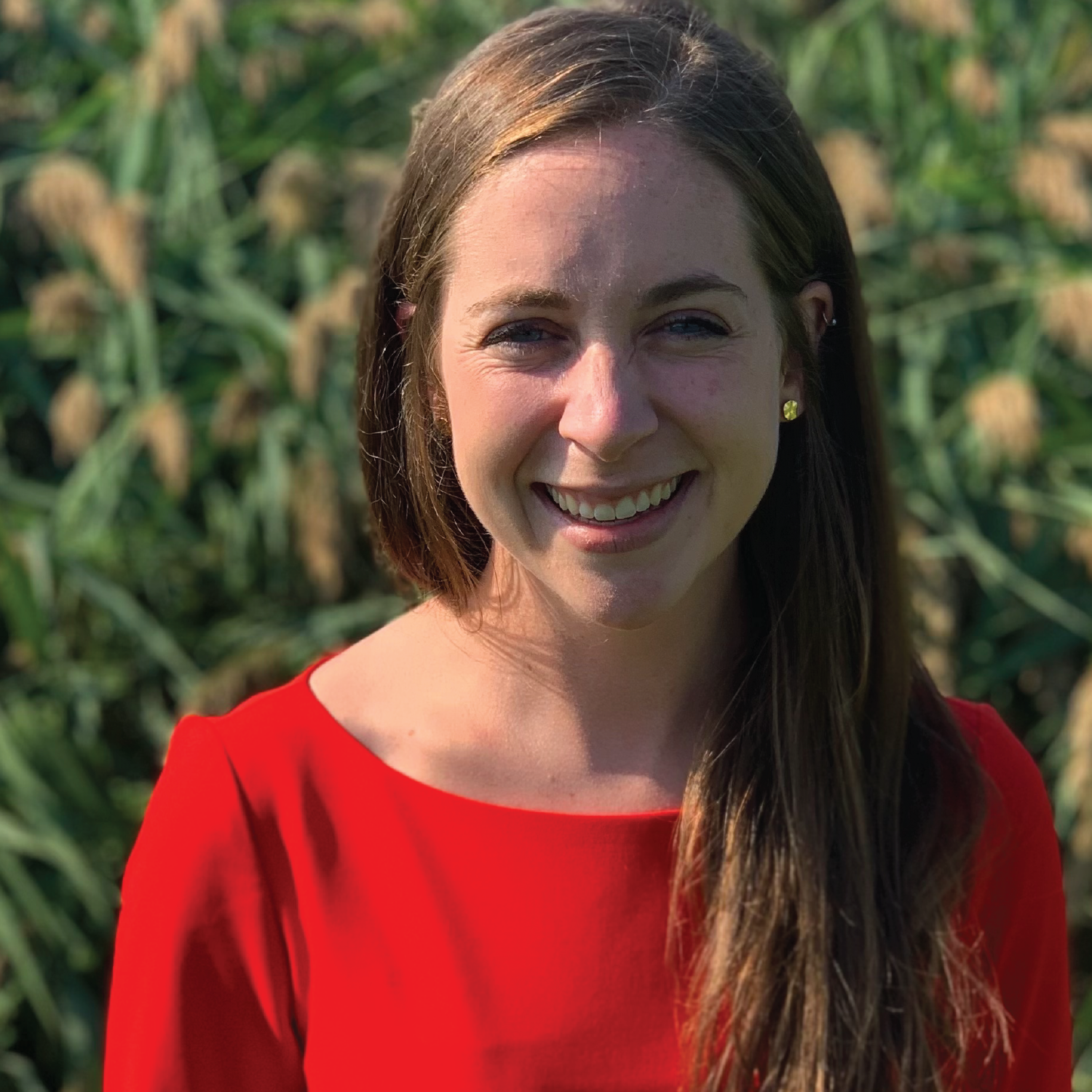
Photo at top of page: Laurel Wiinikka-Buesser and students from the Ypsilanti Community High School.
The Agriscience/Botany CTE program isn’t the only example of place-based CTE at Ypsilanti Community High School. The Advanced Manufacturing CTE program, led by Dr. John Kim, has also experimented with place-based applications. Last year, students in the course were approached by their facilities director with a challenge – a small part in the school’s HVAC system had broken and would cost thousands to replace. Could they design and manufacture a replacement? Over the course of a few weeks, the students applied skills they had learned in the CTE course – skills like precision measurement, modeling, and 3D printing – to the school’s HVAC challenge and ended up not only manufacturing a replacement part, but adjusting the design in such a way that it would be far less likely to break in the future. Their expertise and creativity ended up saving the district over $200,000.
“Doing things for an authentic audience and doing place-based learning when there’s actual stakes, just always is really motivating for students,” Laurel says. “They ask such good questions because the answers matter.”
Milo MacGregor, a student in the Agriscience/Botany course and a member of the advisory committee thinks that CTE and place-based education have given him a huge leg-up in thinking about his future. “High school is the main time when you find out who you are going to be. In CTE programs, you can do that by taking courses where you try new things without the pressure of paying for it. You can still earn certificates, but you can switch fields if you want. And it’s really hands-on, not all lectures and taking notes,” he says. “Normal courses don’t do that.”
So, where do we go from here? How can place-based education and CTE work more closely together to help us shape change in our communities and in education? For Ryan, the responsibility goes both ways. “It will be both the place-based education community reaching out saying, ‘We’ve got this phenomenal idea for CTE’, and the CTE programs saying ‘We’re teaching these skills but need a way to apply them,’” he says. “Keep reaching out to the Laurels and the John Kims because look at what they do, not just financially for that district, but by giving the students a real-life example of how they can problem solve within their own place. That’s the power of CTE.”
Laurel would like to see more cross-curricular connections between CTE and general education programs. “Sometimes CTE gets siloed off as separate – like we have this kind of dual pathway where you’ve got students who are dual enrolled in college and high school, and then you’ve got students who are career focused. But I really don’t think it should be separate,” she says. “I would like to see more interdisciplinary work where teachers have the opportunity to design units together or even just one-off day lessons or moments that are more cross-curricular. I think it would be cool to have the CTEs work together, too. I would love to work with [the culinary CTE program] to grow food, and then do a seasonal meal based on whatever’s growing in the garden.”
For Paula, the charge to use CTE and place-based education together to shape change is a big one. “We need to expand our thinking about CTE and place-based education from ‘we need to generate jobs’ to ‘we need to generate life,’” she asserts. “You know, we’ve got to learn a different way to live with our environment, other than to just devastate it for our needs, because we’re at a point where we’re not able to just keep doing that. We’ve got to use our careers to be able to make better choices. The point of an education is to be able to make a good choice. And so a career technical education helps you make that good choice and a place-based career tech helps you make a choice that has heart in it.”
In Partnership,
Anna Balzer
A special thanks to the SEMIS Coalition members who were a part of this month’s Coalition Conversation blog: Milo MacGregor, Dr. Ryan Rowe, Paula Sizemore, and Laurel Wiinikka-Buesser. To see more from the Agriscience/Botany projects from the Agriscience/Botany and Advanced Manufacturing CTE courses and other student-led place-based projects, visit https://semiscoalition.org/student-gallery/
Donate today to the Southeast Michigan Stewardship Coalition and bring joy to teachers and students learning through place. Your contribution makes learning come alive!